


Dog worms symptoms
"Puppy parasites"

There are many things to look for when identifying dog worms symptoms. There are some occasions when worms do not present symptoms, which make regular trips to the vet necessary for your pets health.
Worms that do cause symptoms to varying degrees are roundworms, hookworms, whipworms, tapeworms and heartworms. The symptoms caused include:
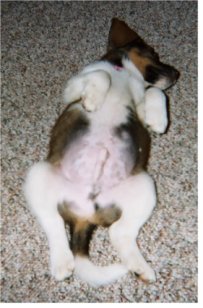
Symptoms of puppy worms
- Dull coat: Lack of luster or a coat that should be shiny and it isn't; also constant shedding can be a symptom of worms.
- Weight loss: Any obvious, unintended weight loss in your pet should be addressed with the vet as soon as possible.
- Appetite loss: Keep track at least mentally of how much your pet regularly eats so you can identify any changes as soon as they occur. Changes in your pets eating habits can indicate dog worms symptoms.
- Pot-bellied appearance: The distended stomach or "pot-belly" on your puppy may be cute but is an assurance your pup has a worm infestation and is probably not very comfortable for him or her.
- Coughing: Two worm types can cause coughing, the roundworm and the heartworm. The roundworm is easily treated. The heartworm, if it has reached the coughing stage has much less success with treatment and without treatment will lead to death.
- Low energy level: As you are aware of your pet's daily activity level, take notice of any lethargic behavior that is not common to your pet. This is typically accompanied by lack of appetite.
- Diarrhea: Loose, runny bowels, and inside accidents can indicate a worm infestation. There may be live or dead worms in the stool.
- Vomiting: Most of the time what we believe is vomiting is just regurgitation in a dog. There is typically partially digested food and bile present if it is vomit. Vomiting and diarrhea are the leading causes of dehydration.
- Dehydration: The dog's head is the fastest place to look for signs of dehydration. Lift the skin on his head. Does it spring back? If not this could indicate dehydration. Lift your dog's lip. Are his gums pink? If the gums are gray or white, it could be dog worms symptoms.
Most intestinal worms are easy to treat and only take one dose from your veterinarian. It is usually given in pill form, but there is liquid available for small puppies. Heartworm treatment is an arduous ordeal for your dog, so the best option is prevention. This is made available in a pill for monthly administration.