


Canine ear infections
"Yeast infection treatments"

Canine ear infections can affect any breed of dog at any age. They do affect certain breeds more prevalently, the poodle, schnauzer and cocker spaniel are a few that are more susceptible to ear infections. The specific causes, symptoms and treatments make this a straightforward problem to address.
Dog ear cleaner
There are three primary possible causes for the pet ear infection. The specific cause can be determined by your vet using ear cytology (a sample of material from your dogs ear canal placed under a microscope to determine if there is an organism causing an infection).
This could be bacteria, yeast or parasites. Other possible causes are food allergy (25% of dogs with food allergy present ear infections as the only symptom!), foreign objects in the ear, and the amount of time your dog spends in the water.

Bacteria
Cause(s) - Bacteria are commonly found even in healthy canine’s ears. When there are moderate to large populations of bacteria are present, this can indicate they are the cause of the infection, particularly when they are accompanied by the symptoms of a bacterial ear infection.
Symptom(s) - These include red, tender ears and canal, moist ears with a yellow paste. A strong fruity smell can also be present.
Treatment(s) – Bacterial canine ear infections can require both oral and topical medication, as prescribed by your veterinarian. Following your vets instructions closely helps ensure successful treatment for your dog.
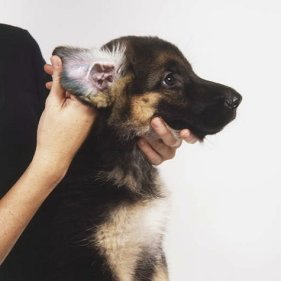
Yeast infection treatments
Yeast
Cause(s) - Dog ear yeast infections occur when the delicate yeast/bacteria balance in your dog’s ear allows an abundance of yeast to grow.
Symptoms (s) - The list of symptoms that may occur are; redness, swelling, sensitivity, crustiness and a foul, yeasty smelling discharge.
Treatment(s) – Your vet can prescribe a medication and treatment regimen to remove the yeast infection. There are also several homeopathic remedies available that you can administer yourself. Of course, there is no substitute for regular veterinary care for your pet. Ask your vet about these methods and any drawbacks they may have before you try them.
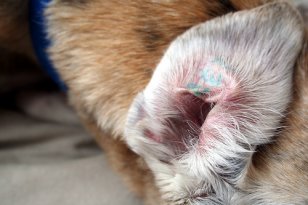
Canine ear problems, parasites
Cause(s)– Ear mites are the most common parasite found to cause ear infections in dogs. They also can be caused by scabies (not restricted to the ear) and ticks (burrowed into the ear canal).
Symptom(s) – Dogs will shake their heads, or paw at their ears. There is a quick way to check your dog for ear mites, take your dogs ear flaps and very gently cover the ear canal and rub gently. The motion will disturb the mites and make them active, in turn causing your dog to itch his ears or shake his head.
Treatment(s) – Your vet can prescribe ointment for your dog to kill the mites. Do remember that typically it is only the adults that are affected and you will have to repeat the treatment when the eggs hatch. Your vet will be able explain the time the cycle takes to complete.
Canine ear infections to Health
Health

Canine Bad Breath
Skin Disorders
Flea Bites
Worms

Ear Infection

Cancer

Pregnancy